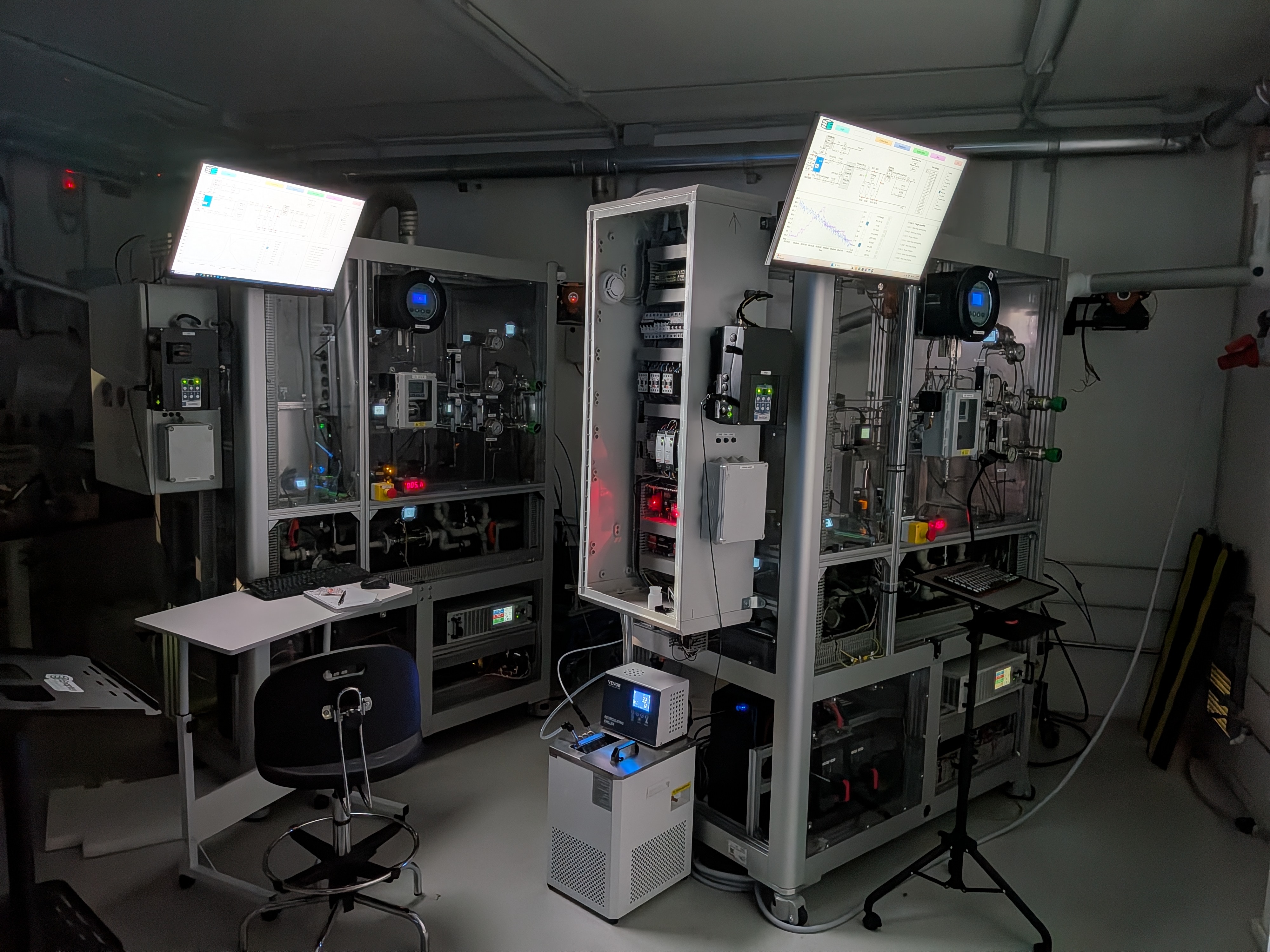
Two ATS4 stack test rigs running simultaneously in the test lab
Photo: Ralph Caldecott
Designing a hydrogen electrolyser test platform from first principles — against commercial alternatives quoted at over €1M and 18-month lead times.
Developing a next-generation electrolyser stack requires the ability to push it to its limits in a controlled, measurable, and repeatable way. Every variable matters — electrolyte conditions, temperature, pressure, flow, power — and an R&D team needs to explore all of them systematically, safely, and with complete confidence in the data they're collecting.
Existing commercial solutions exist for this problem. Specialist manufacturers quote in excess of €1 million per unit with lead times of 18 months or more — and that is with years of prior design work already done. A second quotation from a large Italian industrial automation company came in at a similar figure. For a company developing new stack technology at pace, that cost and lead time is a serious constraint. A purpose-built solution, designed from scratch against a set of internal requirements, was the only viable path.
The ATS4 and ATS5 are complete electrolyser test platforms — all the balance of plant required to run a stack, with significantly greater control over variables, higher-specification components, and a full measurement and software layer designed for R&D use rather than production operation.
The measurement system captures data across the full system: individual electrolyser cells, electrolyte sensors, PSUs, VFD-controlled pumps, hydrogen and oxygen streams, gas analysers, solenoid and mixing valves for cooling, and purge systems. Everything is logged continuously to TDMS files, giving the R&D team a complete, high-resolution record of every test.
The software layer — built in LabVIEW — goes beyond simple data acquisition. It provides an interface designed for an R&D engineer experimenting at the edge of a stack's performance envelope: automated test protocols including polarisation curves, configurable test sequences, and real-time visibility of all system variables. Safety systems are fully integrated, not bolted on — the platform is designed to be operated confidently by researchers pushing stacks hard under controlled conditions.
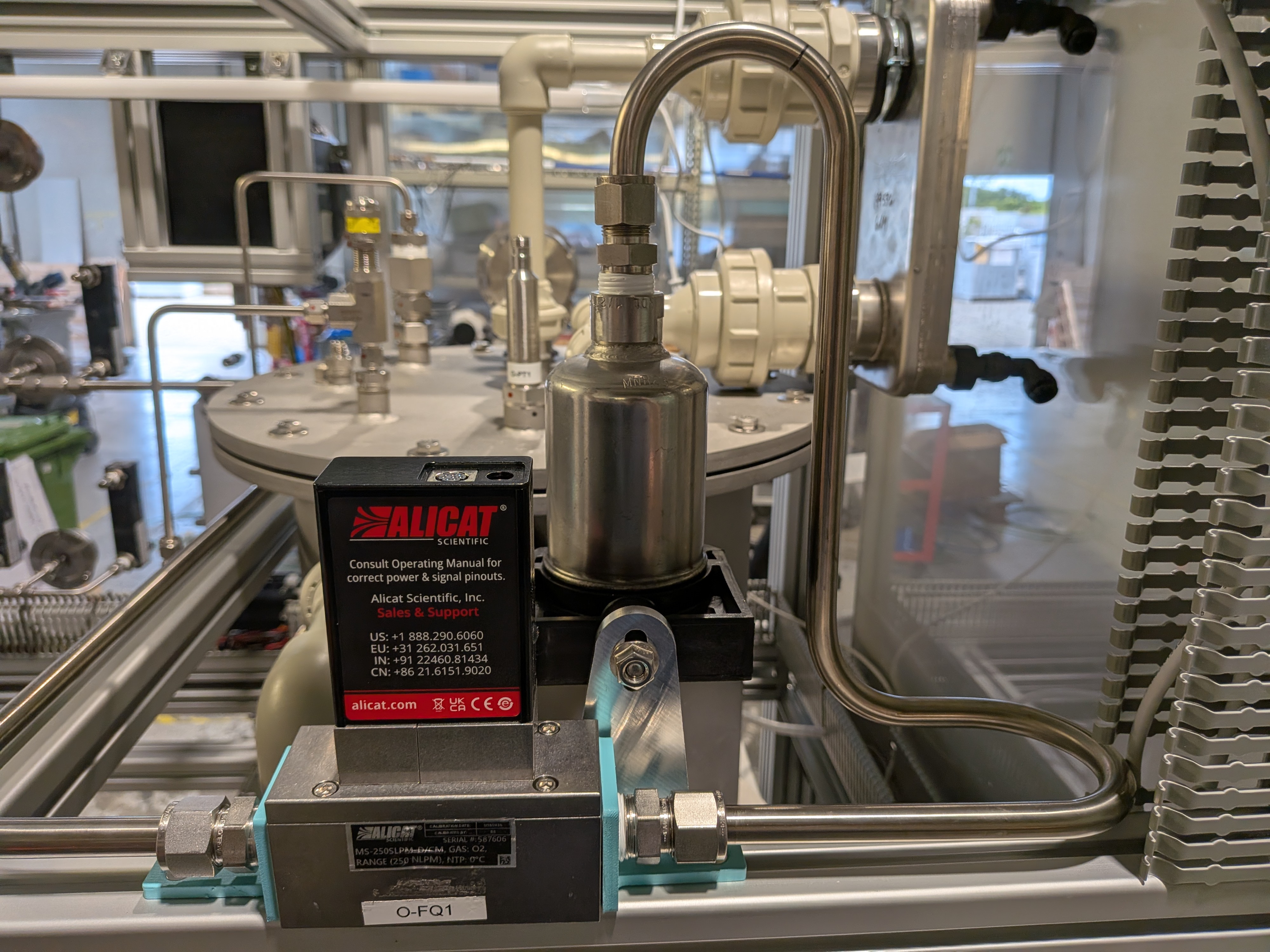
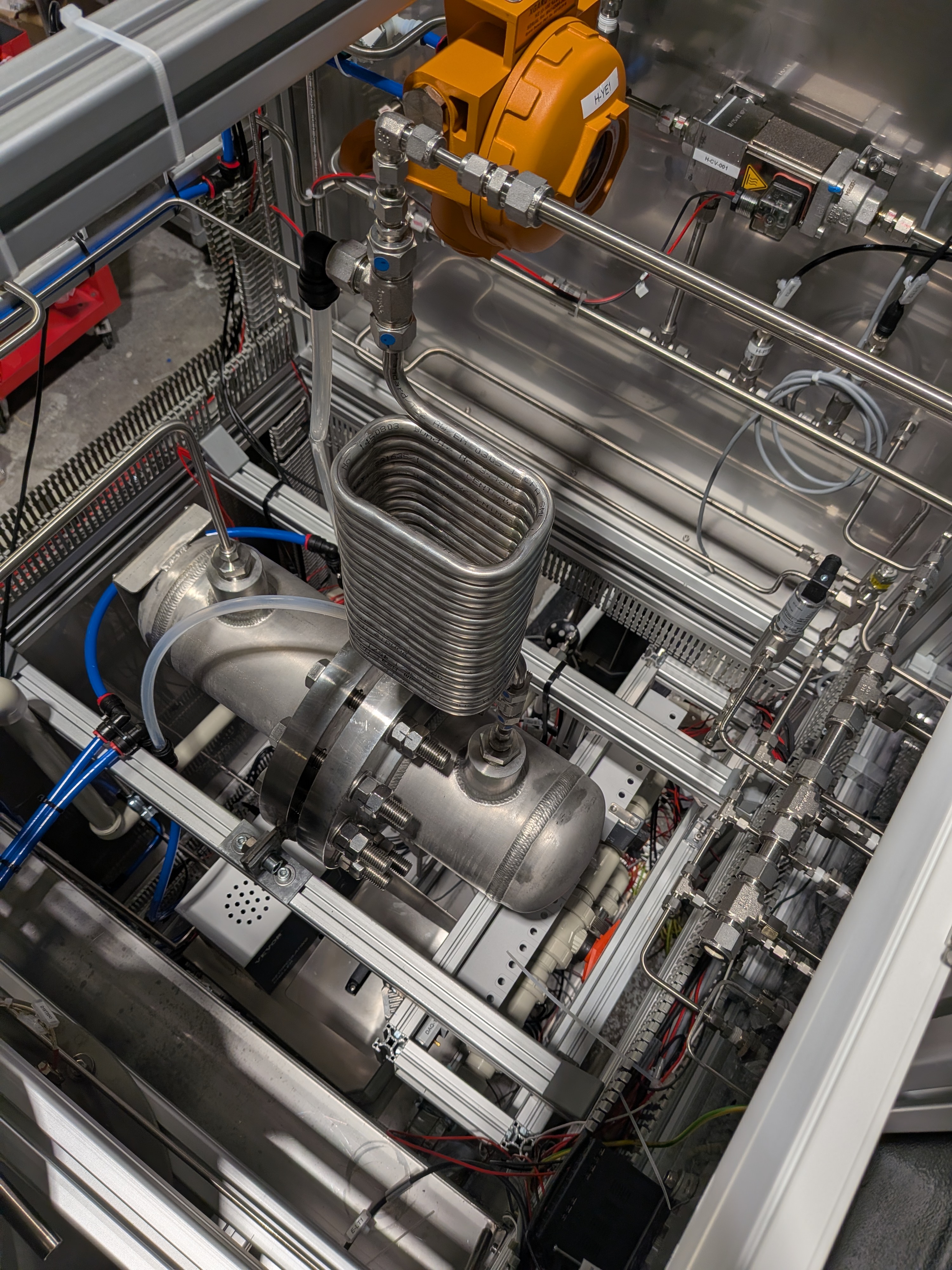
The first system is always the hardest — every decision is made without precedent, every architecture choice carries more risk, and every problem has to be solved rather than referenced. The ATS4 earned its reorder because it worked. The ATS5 was where the real refinement happened: ideas that the ATS4 taught us were possible but impractical to retrofit could be designed in from the start. Subsequent systems aren't harder — they're where you get to make the thing you always intended to build.